
Do We Need ISO 42001 If We Already Have ISO 27001?
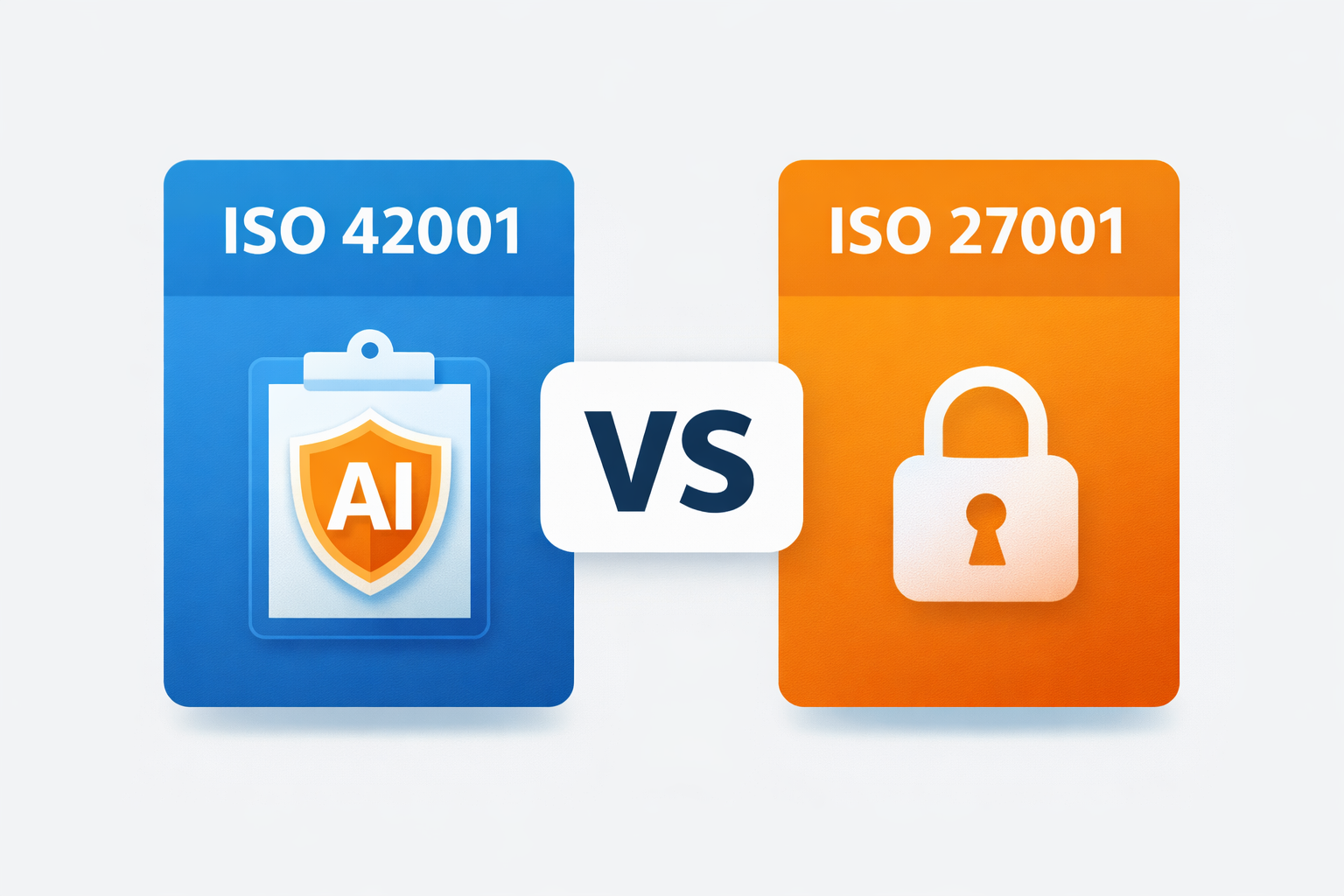
Yes, you do, if AI is a core part of your operations. ISO 27001 and ISO 42001 both help organisations manage risk and compliance but they serve different purposes. ISO/IEC 27001:2022 is an Information Security Management System (ISMS) standard that focuses on securing data and IT assets, ISO/IEC 42001:2023 is an Artificial Intelligence Management System (AIMS) standard that tackles the ethical and operational risks unique to AI systems.
Think of ISO 27001 as your foundation – it helps you secure information and protect your assets from breaches, internal misuse, or technical failure.
ISO 42001, on the other hand, is about managing the impact of AI systems – governing how AI behaves, how it makes decisions, and whether those decisions are fair, explainable, and ethical.
Let’s say your company uses AI for credit scoring, hiring, or personalised recommendations. Even if your data is secure under ISO 27001, ISO 42001 ensures your AI doesn’t unintentionally discriminate, make opaque decisions, or act in ways that erode public trust. These are risks ISO 27001 doesn’t touch.
The good news? Both standards use the same high-level structure (Annex SL), which means you don’t have to start from scratch. You can reuse your internal audits, document control processes, and risk assessments as a foundation. You can integrate AI-specific policies into your existing Information Security Management System (ISMS).
If your AI use is minimal, ISO 27001 might be enough. But if AI drives your services or decision-making, ISO 42001 is essential for building trust and accountability.
What’s the Difference in Timelines to Achieving ISO 27001 vs ISO 42001 Certification?
ISO 27001 generally takes 3 to 12 months to implement, depending on your organisation’s size and existing controls.
ISO 42001 also takes up to 12 months in total, but often requires 3–9 months just for preparation, especially if you haven’t yet formalised AI policies or documented your AI lifecycle.
The extra time for ISO 42001 comes from the need to put AI-specific governance in place – things like transparency measures, model oversight, and ethical risk assessments.
But if you already have ISO 27001, you’re ahead. Shared structures between the two standards make it easier and faster to implement ISO 42001. You can even opt for a combined audit, saving time and resources.
Both certifications follow a two-stage audit process, are valid for three years, and require annual surveillance audits.
Will I Have Better Job Prospects If I Know How to Manage ISO 42001 in 2026?
Yes – and not just better, you’ll be ahead of the curve. In 2026, AI governance is no longer optional – it’s operational. The 2026 World Economic Forum has made it clear: Responsible AI is a board-level priority. If you know how to implement ISO 42001, you’ll be in high demand.
As AI adoption matures, the market is shifting from experimentation to accountability. Companies are no longer asking whether to use AI, they’re asking how to manage it responsibly.
Here’s why:
Board-Level Visibility: Companies now need experts who can govern AI, not just build it. This creates an urgent demand for professionals who understand responsible AI implementation.
The Governance Gap: Over 70% of organisations use AI, but very few have formal governance in place. ISO 42001 is emerging as the global standard, much like GDPR did for data privacy. Stanford’s 2025 AI Index reports that 78% of organisations used AI in 2024, up from 55% the year before. Formal governance often lags adoption, which is why ISO/IEC 42001 is gaining traction.
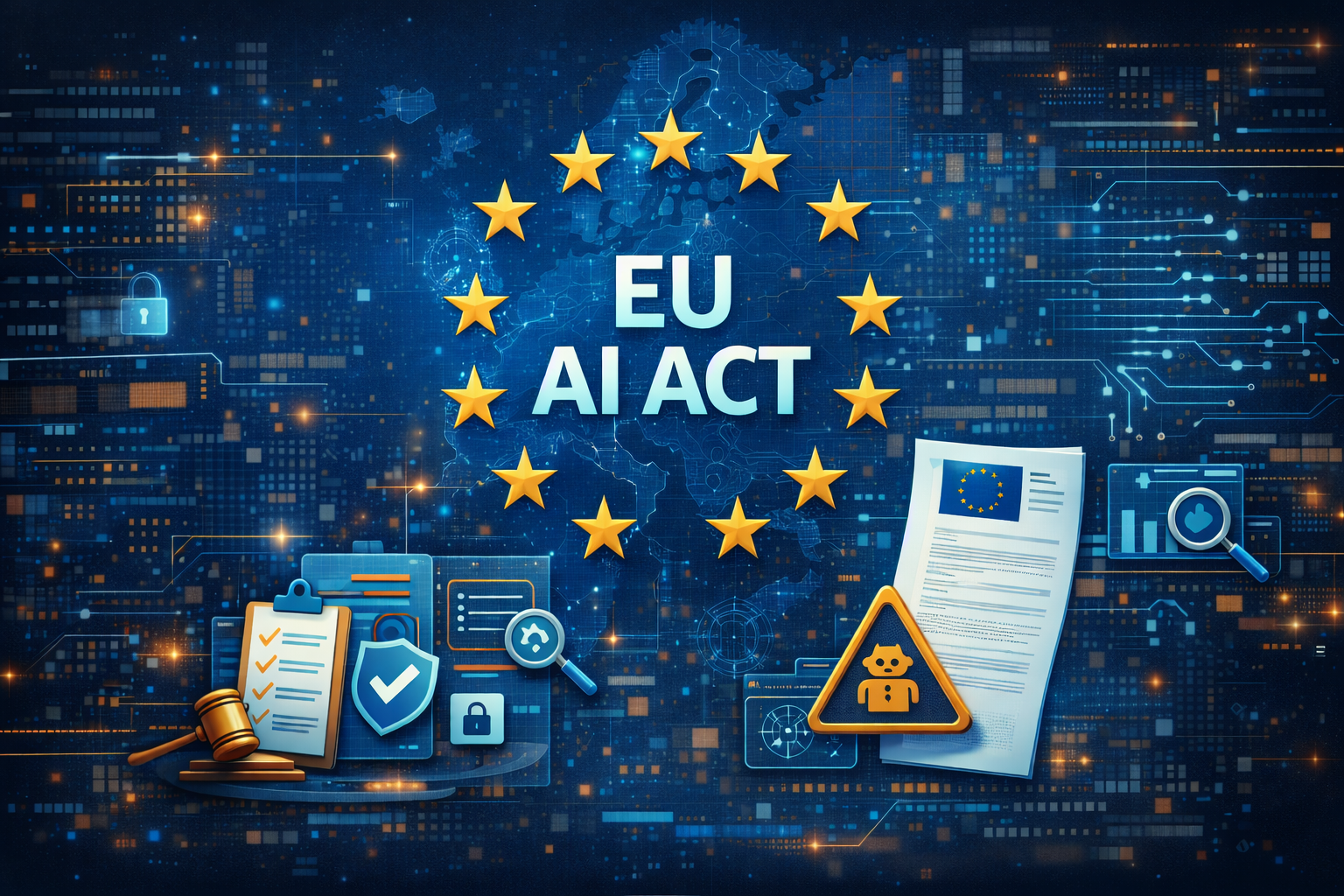
Regulatory Drivers: The EU AI Act which entered into force on 1 August 2024 becomes fully applicable on 2 August 2026, with phased obligations starting earlier. For example, prohibited practices and AI literacy obligations apply from 2 February 2025, and some high-risk system timelines extend to 2 August 2027 depending on category. ISO 42001 maps directly to these regulatory needs.
If you’re ISO 42001 trained, you’ll be qualified for roles like:
- AI Governance Manager
- Responsible AI Officer
- AI Assurance Specialist
- Chief AI Officer (CAIO)
In the UK, market estimates for these AI governance roles sit around the high five figures although compensation varies by region and seniority, with senior roles in the US reaching high six figures. Plus, combining ISO 42001 with ISO 27001 gives you an edge in tech risk and compliance roles.
What Risks Does ISO 42001 Cover That ISO 27001 Does Not?
ISO 27001 protects your data; ISO 42001 governs your AI. Where ISO 27001 focuses on confidentiality, integrity, and availability of information, ISO 42001 zeroes in on AI-specific challenges: fairness, bias, explainability, and human oversight.
Here’s how they differ:
| Feature | ISO 27001 | ISO 42001 |
| Primary Goal | Secure data and IT systems | Ensure ethical and responsible AI |
| Risks Addressed | Data breaches, hacking | Bias, model drift, opacity |
| Key Controls | Encryption, access control | AI lifecycle management, data quality |
| Human Element | Security training | Human-in-the-loop oversight |
| Scope | All IT systems | AI-specific systems |
ISO 42001 requires AI impact assessments to evaluate societal and user harm – something ISO 27001 doesn’t cover.
That said, the two work best together. If you already have ISO 27001, you already run an ISMS aligned to Annex SL – much of the management-system scaffolding transfers – so ISO 42001 implementation is typically faster than starting from scratch. Shared audit cycles and structural alignment make integration smoother.
So while ISO 27001 isn’t a prerequisite, it’s a powerful enabler for responsible AI governance.
Who should prioritise ISO/IEC 42001?
Prioritise ISO/IEC 42001 if one or more of these are true:
You are an AI provider or deployer
- Provider: You develop, train, fine-tune, or package AI models or AI-enabled products for others to use.
- Deployer: You use third-party or in-house AI in your operations, products, or decision-making workflows.
Your sector is regulated or scrutiny-heavy
- Financial services and insurance (credit, fraud, pricing, claims)
- Healthcare and life sciences (triage, diagnostics support, patient pathways)
- Public sector and government services (benefits, eligibility, policing support)
- Recruitment and HR (screening, ranking, performance decisions)
- Education (admissions, proctoring, learner assessment)
- Telecoms and critical infrastructure (network management, incident response)
- Retail and platforms with large-scale personal data (recommendations, trust and safety)
Your AI influences high-impact outcomes
- Decisions affecting a person’s employment, credit, insurance, housing, education, health, liberty, or access to essential services
- Any system that ranks, scores, or profiles people at scale
- AI used to support safety-critical or mission-critical operations
Your AI risk profile is rising
- You operate across multiple jurisdictions with emerging AI rules
- You rely on opaque models (limited explainability or limited documentation)
- You have frequent model updates, retraining, or data drift risks
- You have a complex supply chain (vendors, APIs, embedded models)
- You need stronger auditability for clients, regulators, or board oversight
- Your customers or buyers are asking for assurance
- You sell to enterprise, government, or regulated buyers who require evidence of governance
- You respond to security, privacy, and responsible AI questionnaires or RFPs
- You want a recognised management-system approach for AI trust and accountability
AI governance is now an operational priority. ISO 27001 secures your systems; ISO 42001 governs your AI. If your business relies on AI- or will soon- you need both. ISO 27001 ensures your data is protected. ISO 42001 makes sure your AI behaves responsibly.
If you’re a professional looking to future-proof your career, learning how to manage ISO 42001 is one of the smartest moves you can make. In 2026, organisations won’t just ask whether you can build AI, they’ll ask whether you can govern it. And if you can answer yes to that question, you’ll be in high demand.
GLOSSARY
AIMS (AI Management System)
A structured set of policies, processes, roles, and controls used to govern AI across its lifecycle, from design and development through deployment, monitoring, and retirement.
ISMS (Information Security Management System)
A management system that helps an organisation protect information through risk management and controls, covering confidentiality, integrity, and availability.
Annex SL
A common ISO framework that standardises how management system standards are organised (shared clause structure, terms, and core requirements), making it easier to integrate standards like ISO/IEC 27001 and ISO/IEC 42001.
High-risk system
An AI system where failures or misuse could cause significant harm to people, rights, safety, or access to essential services. In regulation, this term often has a specific legal definition that varies by jurisdiction and use case.
Human oversight
Controls that ensure appropriate human involvement in AI-driven decisions, such as review, ability to intervene or override, escalation paths, and accountability for outcomes.